AI automation is changing how people and businesses complete everyday tasks. By combining artificial intelligence with workflow automation, it can handle repetitive work, analyze data, and make smart decisions with little human effort. From customer support and marketing to healthcare and finance, AI-powered automation helps improve productivity, reduce costs, and save time. Whether you run a small business or manage a large company, understanding AI automation can help you stay competitive in today’s digital world. In this guide, you’ll learn how AI automation works, its benefits, real-world examples, popular tools, and practical tips for implementing AI-driven workflows successfully.
What Is AI Automation?
AI automation is the use of artificial intelligence to automate tasks that normally require human thinking. Unlike traditional automation, it can learn from data, recognize patterns, and make decisions without following only fixed rules. AI automation combines technologies like machine learning, natural language processing (NLP), and workflow automation to improve efficiency. Businesses use AI-powered automation to streamline operations, reduce manual work, enhance customer experiences, and increase productivity across different departments while making faster and more accurate decisions.
Why AI Automation Matters
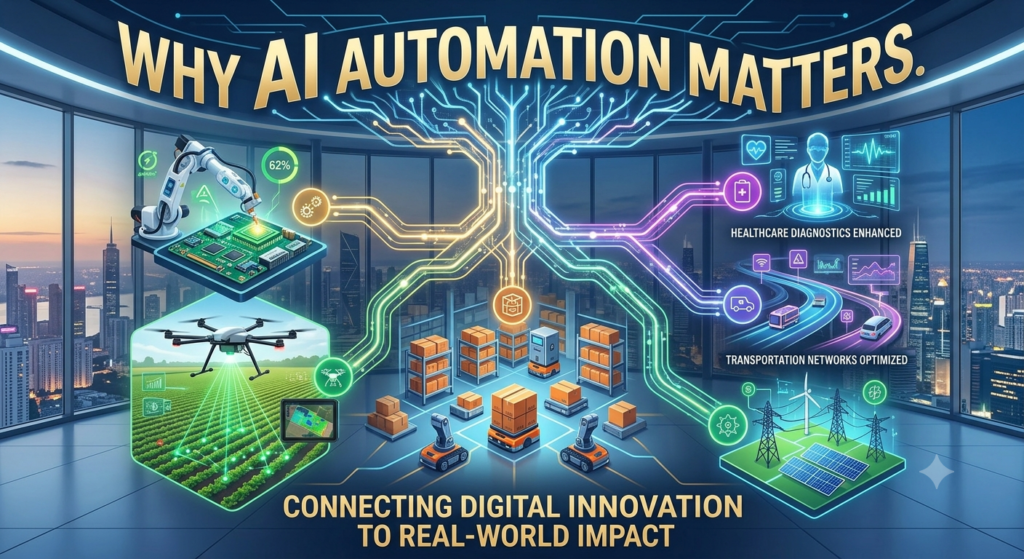
AI automation matters because it helps businesses work faster, smarter, and more efficiently. It reduces repetitive tasks, improves accuracy, and allows employees to focus on more valuable work. From answering customer questions to managing business workflows, AI-powered automation saves time and lowers costs. Companies of all sizes use AI automation to boost productivity, make better decisions, and stay competitive. As artificial intelligence continues to grow, adopting AI automation is becoming an important step toward long-term business success and digital transformation.
Key Components of AI Automation
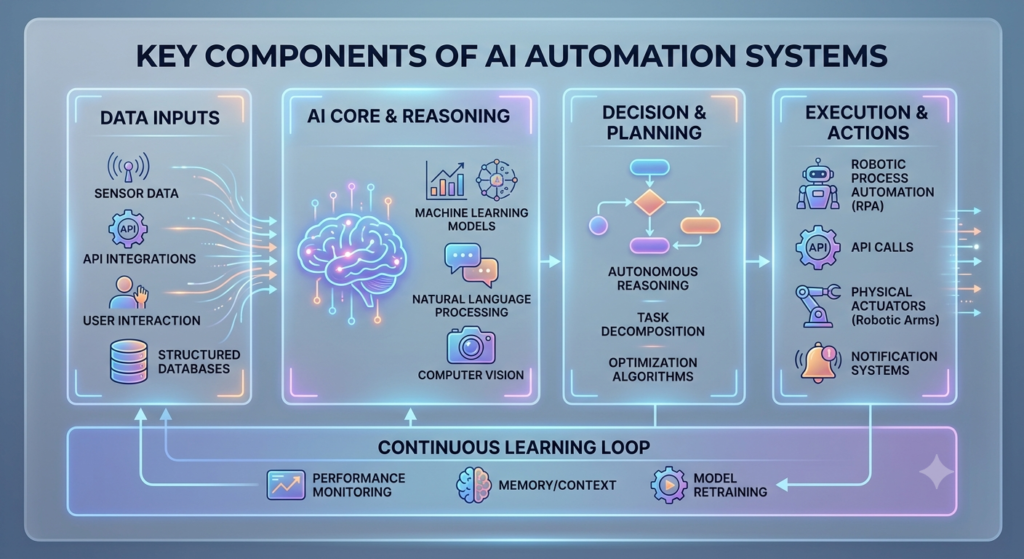
AI automation relies on several technologies that work together to complete tasks efficiently. Machine learning helps systems learn from data and improve over time. Natural language processing (NLP) allows AI to understand and respond to human language. Workflow automation connects different processes to reduce manual work, while predictive analytics supports smarter decision-making. These key components enable AI-powered automation to handle repetitive tasks, improve accuracy, increase productivity, and deliver better results for businesses across various industries.
How AI Automation Works
AI automation works by collecting data, analyzing it with artificial intelligence, and taking action based on the results. Machine learning identifies patterns, while natural language processing (NLP) understands text or speech. The system then automates workflows, completes repetitive tasks, and improves decisions without constant human input. As it processes more data, AI-powered automation becomes smarter and more accurate. This helps businesses save time, reduce errors, improve efficiency, and streamline everyday operations across different departments.
Data Collection
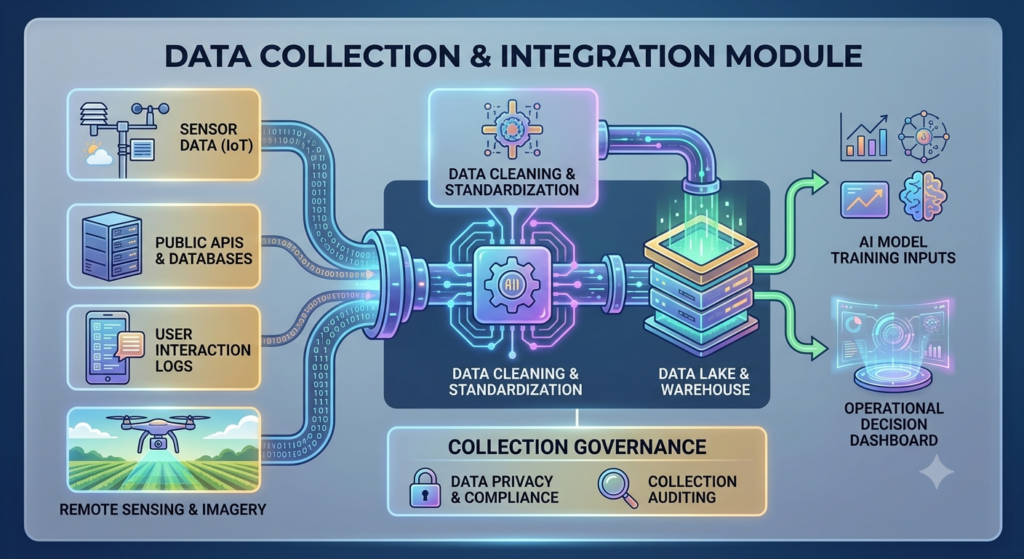
Data collection is the first step in AI automation. The system gathers information from emails, documents, websites, customer interactions, sensors, or business software. High-quality data helps artificial intelligence understand patterns and make accurate decisions. Clean and organized data also improves machine learning performance and workflow automation. By collecting the right information, AI-powered automation can reduce manual work, speed up business processes, and deliver more reliable results across different tasks and industries.
Machine Learning Models
Machine learning models are the brain behind AI automation. They analyze large amounts of data, identify patterns, and improve their performance through experience. Instead of following only fixed rules, these models learn from new information and make smarter predictions over time. Businesses use machine learning in AI-powered automation to detect trends, personalize customer experiences, automate decisions, and optimize workflows. This continuous learning helps improve accuracy, efficiency, and overall business productivity.
Decision Making
Decision making is one of the most valuable features of AI automation. After analyzing data, artificial intelligence selects the best action based on patterns, rules, and predictions. This allows businesses to automate routine decisions quickly and accurately without constant human involvement. AI-powered automation can approve requests, detect fraud, recommend products, and prioritize tasks in real time. Faster and smarter decision-making improves workflow automation, reduces errors, increases productivity, and helps organizations respond quickly to changing business needs.
Workflow Execution
Workflow execution is the stage where AI automation completes tasks automatically after making decisions. It connects different applications, systems, and business processes to ensure work flows smoothly from one step to the next. AI-powered workflow automation can send emails, update databases, process invoices, assign tasks, and generate reports without manual effort. By automating these repetitive processes, businesses save time, reduce human errors, improve operational efficiency, and maintain consistent results across daily operations.
FAQs
What is AI automation?
AI automation combines artificial intelligence with automation to perform tasks, analyze data, and make decisions with little human intervention. It helps businesses improve efficiency, reduce manual work, and increase productivity.
How does AI automation differ from traditional automation?
Traditional automation follows fixed rules to complete repetitive tasks. AI automation can learn from data, recognize patterns, and adapt to new situations, making it more flexible and intelligent.
What are the main benefits of AI automation?
AI automation helps save time, reduce costs, improve accuracy, increase productivity, streamline workflows, enhance customer experiences, and support better business decision-making.
Which industries use AI automation?
Many industries use AI automation, including healthcare, finance, retail, manufacturing, marketing, customer service, logistics, education, and human resources.
What technologies power AI automation?
AI automation relies on machine learning, natural language processing (NLP), predictive analytics, computer vision, workflow automation, and robotic process automation (RPA).