Ranking articles on Google in 2026 requires more than adding keywords and publishing content. Google now focuses on helpful reliable, and user-focused content that solves real problems. With changes like AI Overviews smarter search algorithms and stronger ranking signals, SEO content writing has become more strategic. To rank higher on Google, creators need to understand search intent keyword research content optimization, E-E-A-T, and user experience.This guide will show you a step-by-step SEO strategy to improve Google rankings, increase organic traffic, and create articles that perform well in both traditional search results and modern AI-powered search experiences.
How Google Ranks Articles in 2026
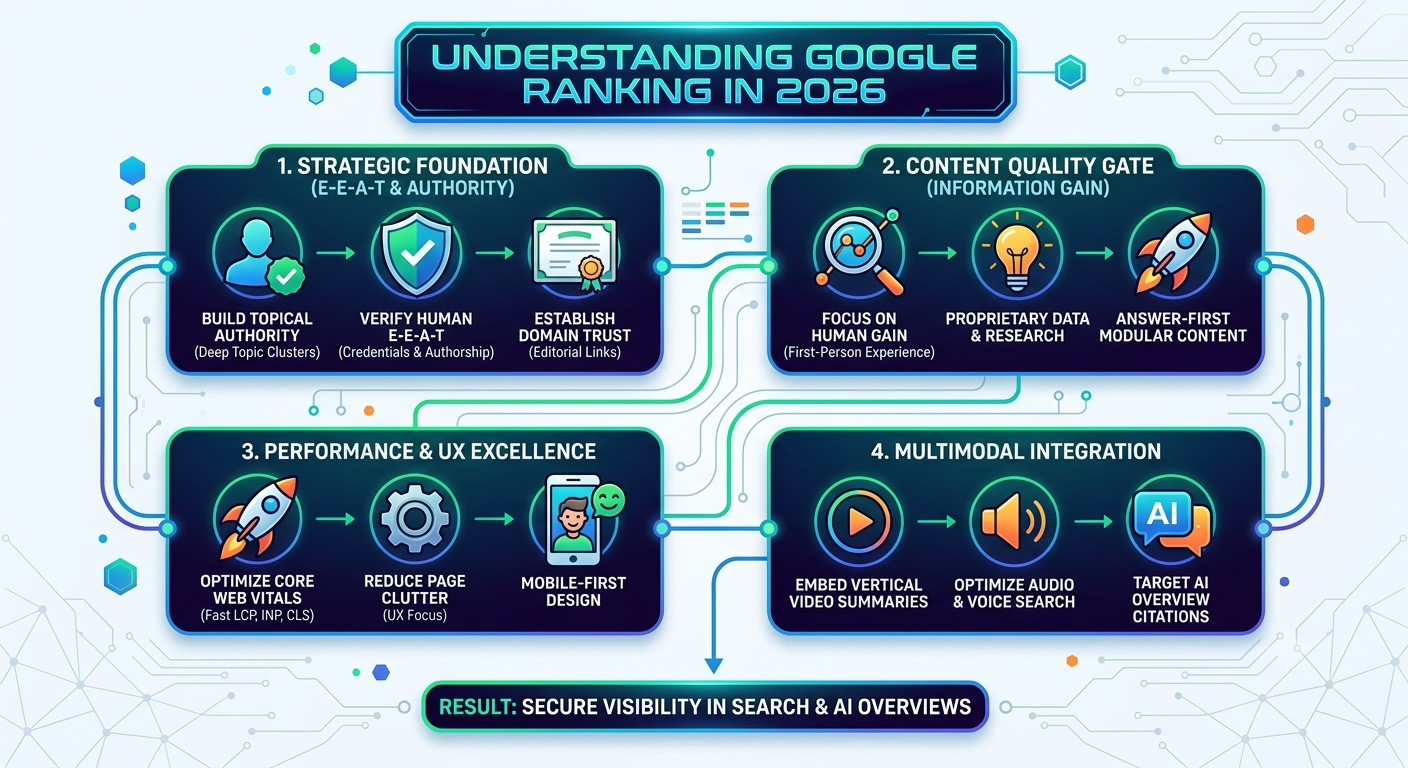
How to Rank Articles on Google in 2026. Google ranking in 2026 depends on understanding users, not just matching keywords. Google uses advanced ranking systems to analyze content quality, relevance, authority, and user satisfaction. Articles that provide helpful answers clear information, and real value have a better chance of ranking higher.Modern SEO focuses on search intent, semantic SEO E-E-A-T and topical authority. By creating well-structured content that meets user needs improves experience and covers a topic deeply, you can increase your chances of achieving better Google search rankings.
Understand Search Intent Before Writing
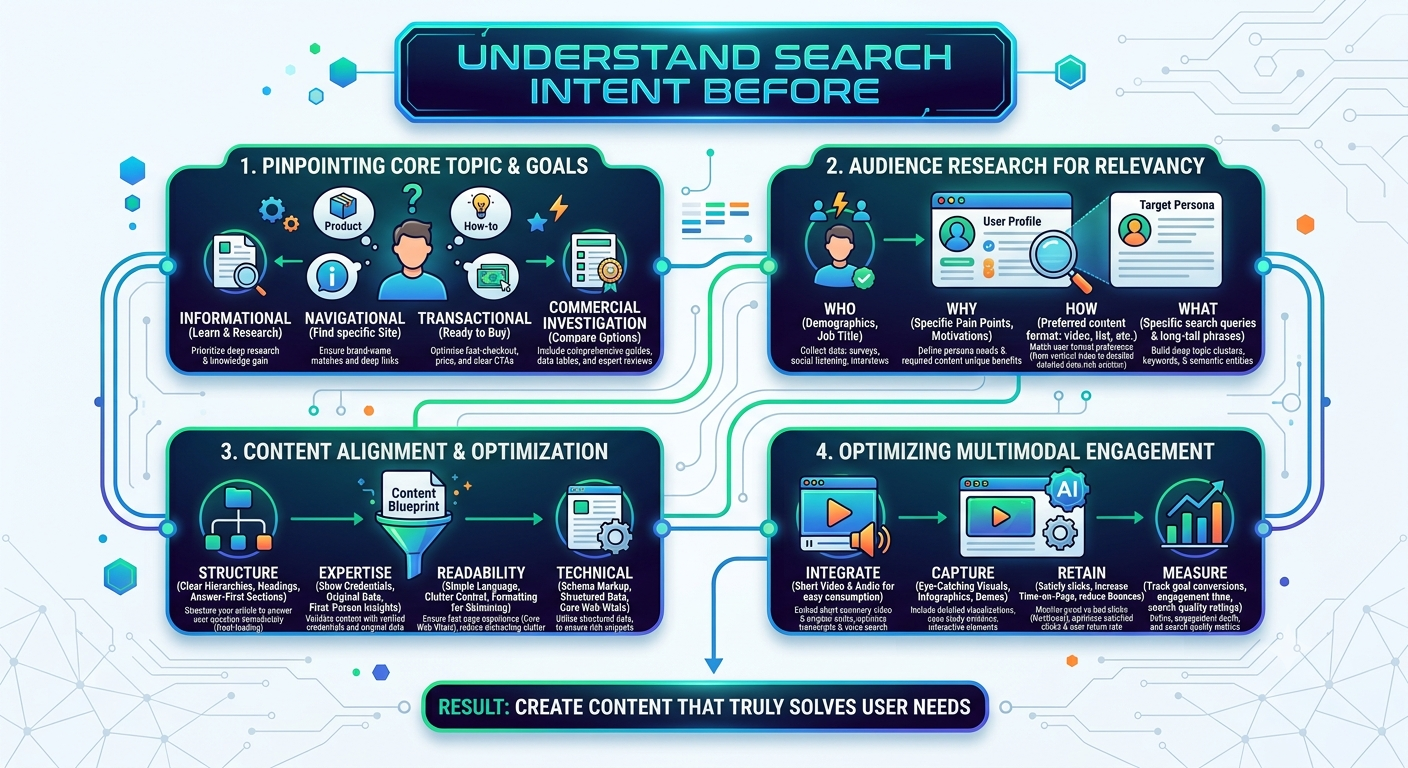
Search intent is one of the most important Google ranking factors in 2026. Before writing an article understand what users are searching for and what type of answer they expect. Analyze whether the intent is informational commercial or transactional. Matching content with user needs improves relevance, engagement and organic rankings. A strong SEO content strategy focuses on solving problems answering questions, and providing valuable information. When your article satisfies search intent Google is more likely to rank it higher.
Perform Smart Keyword Research

Effective keyword research helps you discover what your audience is searching for. In 2026, SEO is not about keyword stuffing but about using primary keywords, secondary keywords and semantic terms naturally. Find relevant search queries long-tail keywords and related topics to create comprehensive content. Keyword clustering and competitor analysis can help build a stronger SEO strategy. By targeting the right keywords and understanding user needs, you can improve content optimization, increase search visibility, and attract more organic traffic.
Build Topical Authority With Quality Content

Topical authority helps Google understand that your website is a trusted source on a specific subject. Instead of creating random articles build content clusters around related topics. Cover important subtopics, answer common questions, and provide detailed solutions. High-quality content with depth accuracy and original insights improves website authority. Using internal linking, semantic SEO and relevant information helps search engines understand your expertise. A strong topical authority strategy can improve rankings and create long-term organic traffic growth.
Create Helpful Content With E-E-A-T
Google rewards content that demonstrates Experience, Expertise, Authoritativeness, and Trustworthiness (E-E-A-T). In 2026, articles should include real examples, accurate information, and practical advice instead of generic content. Adding personal experience, expert opinions, and useful data can make your content more valuable. Human-first writing improves user satisfaction and builds trust with readers. By focusing on helpful content and providing unique insights, you can create SEO articles that perform better in Google Search and AI-powered search results.
Optimize On-Page SEO Elements
On-page SEO helps Google understand your article and its purpose. Optimize important elements such as SEO titles, meta descriptions, headings, URLs, and image alt text. Use your primary keyword naturally while adding related terms throughout the content. A clear heading structure improves readability and user experience. Internal linking also helps search engines discover your pages and understand topic relationships. Proper content optimization increases search visibility, improves click-through rates, and gives your article a stronger chance of ranking higher on Google.
Optimize Articles for AI Overviews and Modern Search
AI Overviews are changing how users find information on Google. To rank in AI-powered search experiences, create clear, accurate, and well-structured content. Use direct answers, helpful explanations, and organized sections that make information easy to understand. Include relevant entities, semantic keywords, and trustworthy sources to improve content relevance. Modern SEO requires optimizing for both traditional Google rankings and generative search. By focusing on user needs, expertise, and valuable information, your articles can gain more visibility in 2026 search results.
FAQ
How can I rank my articles on Google in 2026?
To rank articles on Google in 2026, focus on creating helpful, high-quality content that matches search intent. Use proper keyword research, optimize on-page SEO, improve user experience, build topical authority, and follow E-E-A-T principles.
What are the most important Google ranking factors in 2026?
The most important Google ranking factors include content quality, search intent, E-E-A-T, topical authority, backlinks, technical SEO, page experience, internal linking, and user satisfaction.
Does AI-generated content rank on Google in 2026?
Yes, AI-generated content can rank if it provides valuable, accurate, and original information. Google focuses on content quality and usefulness rather than whether content is created by AI or humans.
How long does it take for an article to rank on Google?
The time required to rank depends on competition, website authority, content quality, and SEO strategy. Some articles may rank within weeks, while others can take several months to reach higher positions.
How important is keyword research for SEO articles?
Keyword research is still important in 2026 because it helps you understand what users search for. However, successful SEO requires using keywords naturally while covering topics deeply and satisfying user intent.
What is E-E-A-T and why is it important for Google rankings?
E-E-A-T stands for Experience, Expertise, Authoritativeness, and Trustworthiness. It helps Google evaluate whether content is reliable and created by a knowledgeable source.
How can I optimize articles for Google AI Overviews?
To optimize for AI Overviews, create clear answers, use structured headings, provide accurate information, include relevant entities, and write content that directly solves user questions
How many words should an SEO article have in 2026?
There is no fixed word count for ranking. The ideal length depends on search intent and topic complexity. A good SEO article should be complete, valuable, and more helpful than competing pages.
Are backlinks still important for ranking articles?
Yes, high-quality backlinks remain an important ranking factor. Links from trusted and relevant websites can improve authority and help Google understand your website’s credibility.
Why is my article not ranking on Google?
An article may not rank because of poor search intent matching, weak content quality, low authority, technical SEO issues, poor internal linking, or strong competition.
How often should I update old articles for SEO?
You should regularly review and update old articles when information becomes outdated. Refreshing statistics, improving content quality, and adding new insights can help maintain or improve rankings.
What is the best SEO strategy for ranking articles in 2026?
The best SEO strategy combines search intent optimization, quality content creation, topical authority, technical SEO, internal linking, backlinks, and optimization for AI-powered search experiences.