Multimodal AI is changing the way people interact with artificial intelligence by allowing machines to understand and process different types of data, including text, images, audio, and video at the same time. Unlike traditional AI, which focuses on a single input, multimodal artificial intelligence combines multiple data sources to deliver smarter and more accurate results. From advanced multimodal AI models like GPT-4o and Gemini to healthcare, education, and business applications, this technology is transforming industries. In this guide, you’ll learn what multimodal AI is, how it works, its benefits, popular tools, real-world examples, and why it represents the future of AI innovation.
What Is Multimodal AI?
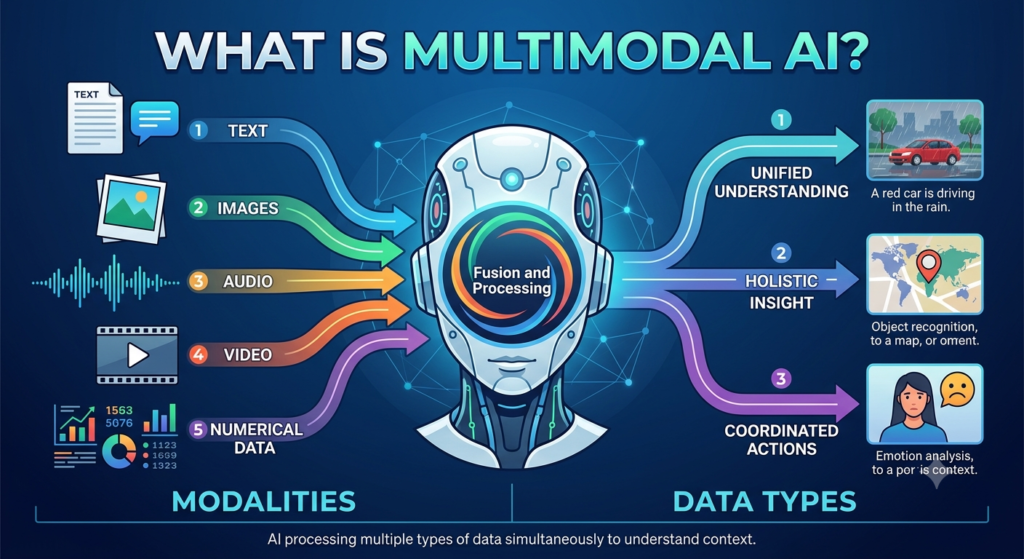
Multimodal AI is a type of artificial intelligence that understands and combines different kinds of information, such as text, images, audio, video, and speech, to perform tasks more accurately. Unlike traditional AI, which processes only one data type, multimodal AI models connect multiple inputs to gain better context and produce smarter results. This approach powers advanced multimodal language models like GPT-4o and Gemini, making multimodal AI useful for healthcare, education, customer support, content creation, robotics, and many other real-world applications.
“`
How Does Multimodal AI Work?
Multimodal AI works by collecting and analyzing different types of data, such as text, images, audio, and video, at the same time. It uses technologies like machine learning, natural language processing (NLP), computer vision, and multimodal foundation models to understand the relationship between these inputs. After combining the information, the AI generates accurate and context-aware responses. This process helps multimodal AI applications deliver better results in tasks like image recognition, speech understanding, content creation, and intelligent decision-making.
“`
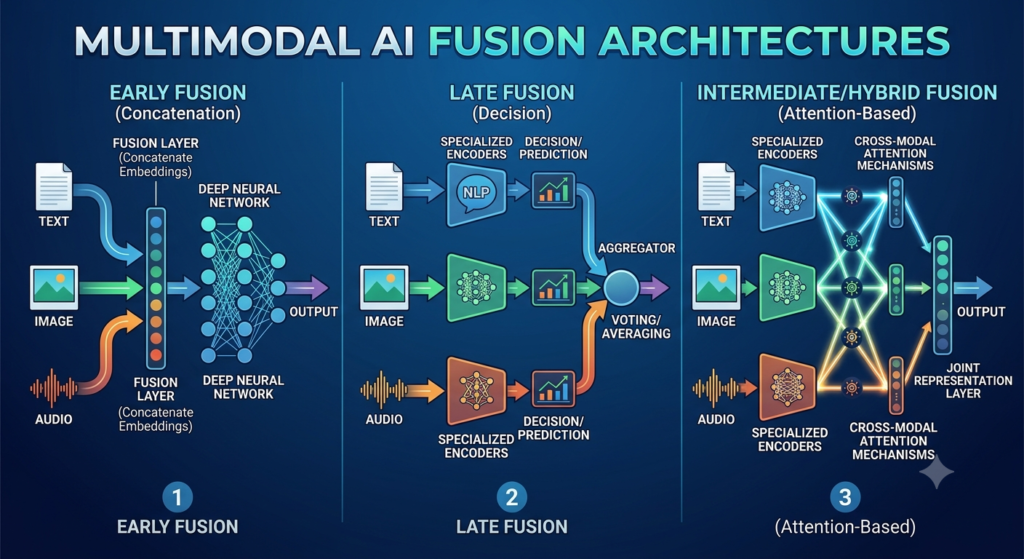
Core Technologies Behind Multimodal AI
Several advanced technologies work together to make multimodal AI powerful and accurate. Machine learning helps the system learn from data, while natural language processing (NLP) understands text and speech. Computer vision enables AI to analyze images and videos, and transformer-based multimodal AI models combine different data types into one meaningful response. These technologies allow multimodal artificial intelligence to improve accuracy, understand context better, and support real-world applications across healthcare, education, business, and content creation.
Types of Multimodal AI Models
There are several types of multimodal AI models designed for different tasks. Vision-language models understand both text and images, while audio-text models combine speech with written content. Video understanding models analyze moving visuals and sound together for deeper insights. Modern multimodal foundation models, such as GPT-4o and Gemini, can process multiple data formats at once, making them ideal for content creation, customer support, healthcare, education, and many other multimodal AI applications.
Benefits of Multimodal AI
Multimodal AI offers many advantages by understanding text, images, audio, and video together. It provides more accurate results, improves decision-making, and delivers a better user experience through context-aware responses. Businesses use multimodal AI to automate tasks, enhance customer support, and create smarter AI solutions. In healthcare, education, and marketing, multimodal AI models help analyze complex data faster and more efficiently. These benefits make multimodal artificial intelligence an important technology for the future of AI innovation.
Real-World Applications of Multimodal AI
Multimodal AI is transforming many industries by combining text, images, audio, and video to solve real-world problems. In healthcare, it helps doctors analyze medical records and scans. In education, it creates personalized learning experiences. Businesses use multimodal AI for customer support, marketing, and content creation, while retailers improve shopping experiences with smarter recommendations. From autonomous vehicles to robotics and finance, multimodal AI applications continue to drive innovation and improve efficiency across different sectors.
Best Multimodal AI Models
Several multimodal AI models are leading the future of artificial intelligence by understanding text, images, audio, and video together. Popular models include GPT-4o, Google Gemini, Claude, Llama, and Qwen. These advanced multimodal foundation models deliver accurate, context-aware responses and support tasks like content creation, image analysis, coding, translation, and customer support. Choosing the right multimodal AI model depends on your needs, budget, and the type of applications you want to build or use.
Frequently Asked Questions.
What is Multimodal AI?
Multimodal AI is a type of artificial intelligence that can understand and process multiple types of data, such as text, images, audio, and video, at the same time. This allows it to provide more accurate and context-aware responses than traditional AI.
How does Multimodal AI work?
Multimodal AI combines technologies like machine learning, natural language processing (NLP), and computer vision to analyze different data formats together. It then uses multimodal AI models to generate meaningful and accurate outputs.
What are the benefits of Multimodal AI?
Multimodal AI improves accuracy, understands context better, enhances decision-making, automates complex tasks, and creates a more natural user experience across industries like healthcare, education, finance, and retail.
What are some examples of Multimodal AI?
Popular examples of multimodal AI include GPT-4o, Google Gemini, Claude, Llama, and Qwen. These models can understand text, images, audio, and other inputs simultaneously for various tasks.
What industries use Multimodal AI?
Multimodal AI is widely used in healthcare, education, customer support, marketing, finance, retail, robotics, manufacturing, and autonomous vehicles to improve efficiency and deliver smarter AI solutions.